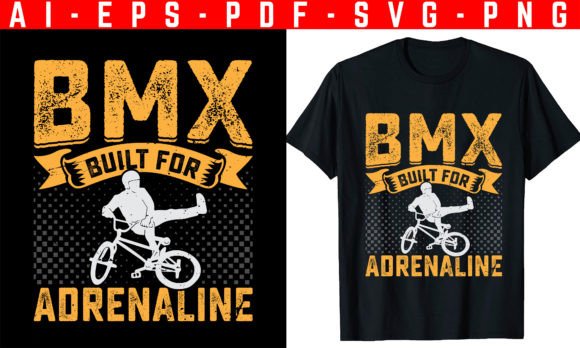
Ignite Your Brand with BMX, Built for Adrenaline T-shirt Design
There’s a raw, visceral energy to BMX that’s hard to capture. It’s in the grit, the speed, the moment of suspension before a rider lands a trick. For designers and entrepreneurs, tapping into that feeling can transform a project from static to sensational. The right design asset doesn’t just decorate; it communicates a story, an attitude, a promise of excitement. That’s precisely the power of a well-crafted graphic like the BMX, Built for Adrenaline design, a versatile digital file that injects high-octane spirit into a multitude of creative ventures.
Capturing Movement in a Static Medium
What makes a design like this so visually compelling? It’s all about dynamic composition. Think of the sharp angles of a bike frame, the curve of a ramp, or the spray of dirt from a tire. These elements are translated into bold lines and shapes that create a sense of motion even on a flat surface. The typography likely echoes this energy—perhaps a custom letterform with a slanted stance or aggressive edges, paired with a solid, grounding typeface for balance. This isn't just a picture of a bike; it's a snapshot of adrenaline. For a brand, this translates to an immediate visual cue of performance, durability, and thrill-seeking, making it a powerful logo design element or a standout centerpiece for packaging design.
From Screen to Street: Practical Applications
The true value of a premium design asset lies in its adaptability. This BMX-themed graphic isn't confined to a single use. Imagine it as the hero image for a social media graphics campaign, instantly grabbing the attention of a younger, active demographic. It could become the central motif for a new line of merchandise, printed on everything from hoodies to skateboards. For a content creator, it adds instant credibility and visual punch to a blog post about extreme sports or urban culture. The included file formats—AI, EPS, SVG, PDF, and high-resolution PNG—ensure seamless integration into any workflow, whether you're using Adobe Illustrator for detailed edits, Cricut for cutting projects, or simply dropping the transparent PNG into a presentation.
Beyond the T-Shirt: A Design System Starter
While the name suggests apparel, think of this asset as the cornerstone of a broader brand identity. A strong, action-oriented graphic can be deconstructed. The silhouette could become a subtle watermark. The color palette can be extracted and applied to your website, business cards, and email headers. The typographic style can inform your entire font pairing strategy, guiding you toward other sans serif or display fonts that share a similar modern, bold energy. This approach creates visual consistency, which is fundamental for brand recognition. Customers begin to associate that specific visual language—those shapes, that energy—with your business, whether they see it on an editorial layout or a Instagram story.
Making It Your Own: The Custom Design Advantage
Sometimes, a pre-made design is the perfect spark, but you need the flame to burn in a specific direction. This is where the option for a custom design becomes invaluable. Working with a professional designer to tailor a concept means you can infuse your unique brand story into the adrenaline. Maybe you need the rider's gear to match your company colors, or you want the typography to incorporate a specific wordmark. A custom approach ensures the final product isn't just high-quality, but uniquely yours, strengthening your professional presentation and helping you stand out in a crowded market. It’s an investment in a creative font and graphic system built specifically for your goals.
Key Considerations for Implementation
Before you download and dive in, a few practical steps will ensure the best results. First, test the design's scalability. How does it look both large on a poster and small as a favicon? The vector files (AI, EPS, SVG) are your best friends here, as they can be resized infinitely without losing quality. Second, consider readability if the design includes text. Ensure any accompanying type in your project is clear and legible against the background, especially for web design and marketing assets where quick comprehension is key. Finally, always review the licensing for commercial use to ensure your projects, whether for a client or your own print-on-demand business, are fully covered. This due diligence is part of building a sustainable and professional creative practice.